
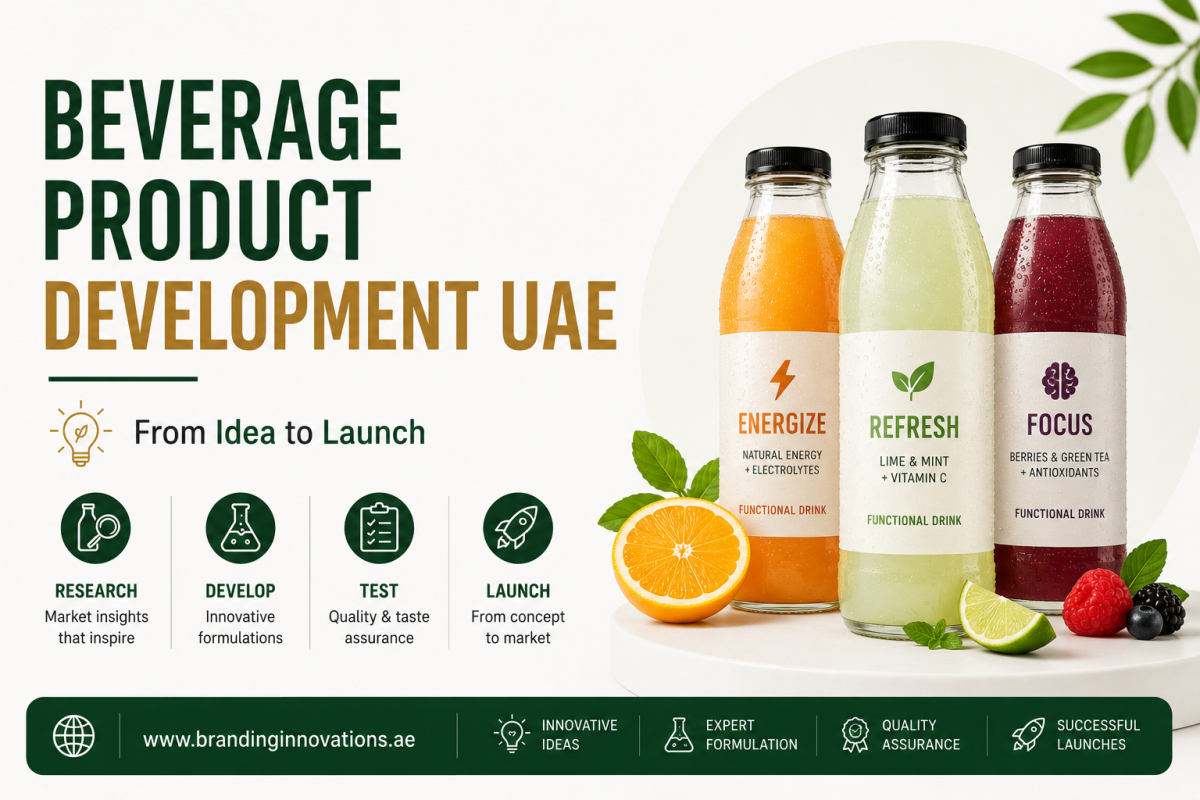
Developing a new beverage in the UAE involves much more than creating a recipe. A successful drink needs to satisfy consumers, deliver consistent quality, work at commercial scale, fit the intended price point, and stand out in a competitive market.
This is why beverage product development in the UAE requires a structured approach. From the first market research and product concept to recipe development, testing, branding, packaging, manufacturing, and launch, every stage can influence the final success of the beverage.
The UAE offers opportunities for brands across functional beverages, wellness drinks, juices, energy products, sports drinks, flavoured water, botanical beverages, and other ready-to-drink categories. However, consumers have an increasingly wide choice of products, making it important to develop a beverage with a clear purpose and strong market proposition.
What Is Beverage Product Development?
Beverage product development is the complete process of transforming an initial drink idea into a commercially prepared beverage.
It can include:
- Market and competitor research
- Consumer and trend analysis
- Beverage concept development
- Recipe and formulation
- Ingredient selection
- Flavour development
- Prototype testing
- Product refinement
- Stability and shelf-life considerations
- Branding and packaging
- Manufacturing
- Product launch
- Buyer and distributor connections
Unlike simple recipe creation, product development considers the entire journey of the beverage.
For example, an ingredient chosen during formulation can affect flavour, cost, shelf stability, packaging, manufacturing, and even the way the product is marketed. Considering these relationships early can help businesses make better commercial decisions.
Why Is Beverage Product Development Important in the UAE?
The UAE’s beverage market is highly diverse and competitive. Consumers can choose between international brands, regional products, local startups, premium beverages, functional drinks, and traditional refreshments.
A new beverage therefore needs more than an attractive concept.
Effective product development can help businesses:
- Identify their target consumer
- Create a differentiated product
- Develop an appealing flavour
- Build a commercially practical formula
- Reduce avoidable development mistakes
- Prepare the product for manufacturing
- Establish a clear brand identity
- Plan a route to market
A beverage may have an interesting concept but still struggle if the taste is not appealing, production costs are too high, the packaging does not communicate the product clearly, or the formula cannot be produced consistently.
Product development brings these considerations together.
Key Stages of Beverage Product Development UAE
1. Market Research and Opportunity Identification
The first step should be understanding the market opportunity.
Research can examine consumer preferences, competitor products, pricing, packaging, flavour trends, category growth, and potential gaps.
The target consumer should also be clearly defined.
For example, a functional hydration drink aimed at fitness consumers may require a different product proposition from a premium botanical beverage designed for hotels and cafés.
Research helps answer an important question: Why would consumers choose this beverage instead of an existing product?
Branding Innovations highlights research into market trends, consumer behaviour, and competitors as an important part of its beverage-development process.
2. Beverage Concept Development
Once an opportunity has been identified, the idea can be developed into a clear product concept.
The concept may define:
- Beverage category
- Target audience
- Product purpose
- Flavour direction
- Functional ingredients
- Packaging format
- Price positioning
- Sales channels
- Brand proposition
A strong concept provides a foundation for the formulation and branding stages.
It also prevents the development process from becoming focused on adding ingredients simply because they are popular. Every component should have a purpose within the final product.
3. Recipe and Formulation Development
The next stage is turning the concept into a beverage formula.
Depending on the product, formulation may involve fruit ingredients, flavours, sweeteners, acids, vitamins, minerals, electrolytes, botanical ingredients, stabilisers, preservatives, or other suitable components.
The challenge is finding the right balance.
An ingredient may provide a functional benefit but introduce bitterness. A sweetener may reduce sugar but change the aftertaste. A fruit ingredient may improve flavour but affect colour or stability.
Professional formulation considers these interactions to create a beverage that balances taste, functionality, stability, and commercial practicality.
Branding Innovations describes its recipe-development process as including ingredient selection, sample development, and refinement until the desired flavour is achieved.
4. Prototype Development and Testing
The first formula is rarely the final formula.
Developers create prototypes and assess characteristics such as:
- Taste
- Aroma
- Sweetness
- Acidity
- Mouthfeel
- Appearance
- Flavour intensity
- Aftertaste
The recipe can then be adjusted based on the results.
This iterative process is particularly important for functional and innovative beverages because active or botanical ingredients can introduce sensory challenges.
A successful prototype should not only demonstrate that the idea works. It should provide a strong foundation for further development and commercial production.
5. Commercial Scale-Up
Moving from a small prototype to commercial manufacturing is one of the most important stages of beverage product development.
A formula that works in a small laboratory or kitchen batch may behave differently when produced in large quantities.
Commercial manufacturing introduces differences in:
- Mixing equipment
- Processing temperatures
- Production volumes
- Filling systems
- Processing times
- Storage conditions
Ingredients can separate, textures can change, or flavours can behave differently at larger volumes.
For this reason, commercial scale-up should be considered during formulation rather than after the product has already been finalised.
The objective is to create a formula that can be reproduced consistently while remaining commercially viable.
6. Branding and Packaging
A beverage needs to communicate its value before consumers taste it.
Branding and packaging therefore form an important part of product development.
The visual identity should match the target audience and positioning. A premium wellness drink may require a very different presentation from a sports beverage, family juice, or youthful energy product.
Packaging development may involve decisions about:
- Bottle or can format
- Size
- Label design
- Brand identity
- Product messaging
- Nutritional information
- Shelf presentation
- Practical production requirements
Developing branding alongside the product can help ensure that the finished beverage has a consistent market proposition.
7. Manufacturing and Production
Once the product has been developed and approved, businesses need to identify how it will be manufactured.
For new beverage brands, this can be one of the more challenging stages because they may not yet have relationships with suitable co-packers or ingredient suppliers.
An experienced development partner can help businesses identify appropriate production options and consider factors such as minimum order quantities, packaging formats, production costs, and scalability.
Branding Innovations states that its industry network helps secure co-packers and suppliers and provides businesses with information on production options and costs.
UAE Regulatory and Commercial Considerations
Regulatory planning should be considered during beverage product development rather than left until the product is ready to launch.
Depending on the beverage, businesses may need to consider product registration, ingredients, labelling, packaging, nutritional information, and applicable claims.
Sweetened beverages also require particular attention in the UAE. Since 1 January 2026, the UAE has used a tiered volumetric excise-tax model based on total sugar and other sweeteners per 100 ml. The Federal Tax Authority classifies sweetened drinks into high-sugar, medium-sugar, low-sugar, and certain artificially sweetened categories under the applicable framework.
For relevant products, producers, importers, and stockpilers must also obtain the required conformity certification for sugar and sweetener content and submit it during the applicable registration process.
This demonstrates why formulation, compliance, and commercial planning should be considered together from the beginning.
Why Choose Branding Innovations for Beverage Product Development in the UAE?
Choosing an experienced development partner can make the journey from beverage concept to market more structured.
Branding Innovations specialises in beverage development and branding and states that it has developed and launched more than 200 food and drink brands worldwide. Its approach covers research, recipe development, branding, packaging, manufacturing, product launch, and buyer connections.
End-to-End Development
Instead of treating formulation as a standalone service, Branding Innovations supports multiple stages of the product journey.
This allows businesses to consider how research, formulation, branding, packaging, manufacturing, and launch work together.
Recipe Development Expertise
Taste remains one of the most important factors in beverage success. Branding Innovations’ recipe-development process focuses on selecting ingredients, creating samples, testing the product, and refining the recipe.
Branding and Packaging Support
A strong beverage needs a strong visual identity. Branding Innovations supports branding and packaging development to help products communicate their proposition effectively in competitive retail environments.
Manufacturing Connections
Product development needs to lead into practical production. Branding Innovations works with an industry network of co-packers and suppliers to help businesses move from approved recipe to manufacturing.
Buyer Connections
The final objective is not simply to manufacture a beverage but to bring it to market. Branding Innovations highlights access to a network of more than 6,500 buyers across retailers, wholesalers, and distributors.
This creates a more connected path from product development toward potential commercial opportunities.
Common Beverage Product Development Mistakes
Developing Without Market Research
A product created without understanding its target consumer may struggle to differentiate itself.
Treating the First Recipe as Final
Most beverages require testing and refinement before the formula is ready for commercial production.
Ignoring Scale-Up Requirements
A successful small batch does not guarantee successful large-scale manufacturing.
Choosing Ingredients Without Considering Cost
An impressive formula can become commercially difficult if ingredient costs do not support the target price.
Leaving Branding Until the End
Product positioning should influence branding and packaging from an early stage.
Ignoring Regulatory Considerations
Requirements relating to ingredients, labelling, registration, and sweetened-beverage classification should be considered during development.
FAQs About Beverage Product Development in the UAE
What does beverage product development include?
It can include market research, concept development, formulation, recipe creation, prototype testing, refinement, branding, packaging, manufacturing, launch planning, and buyer connections.
How long does beverage product development take?
The timeline depends on the beverage category and complexity. Research, formulation, prototype testing, revisions, stability work, packaging, manufacturing, and regulatory processes can all affect the final timeline.
How much does beverage product development cost in the UAE?
Costs vary according to the product type, formulation complexity, ingredients, number of prototypes, testing, branding, packaging, and manufacturing requirements.
Can I develop a beverage from my own recipe?
Yes. An existing recipe can provide a starting point, but it may require professional refinement to improve taste, stability, consistency, scalability, and manufacturing compatibility.
Can beverage product development include branding?
Yes. Developing the product and brand together can help ensure that the formula, packaging, positioning, and consumer message work as one proposition.
Can a UAE beverage be developed for GCC expansion?
Yes. If GCC expansion is part of the long-term plan, it is useful to consider the requirements of target markets during product development, including ingredients, labelling, packaging, registration, and applicable claims.
Conclusion
Beverage product development in the UAE is a complete process that transforms an initial drink idea into a product prepared for commercial production and market launch.
From research and concept development to formulation, prototype testing, scale-up, branding, packaging, manufacturing, and buyer connections, every stage contributes to the final result.
For businesses entering the beverage market, taking an integrated approach can help reduce avoidable mistakes and create a stronger foundation for long-term growth. With the right development expertise, an initial beverage concept can become a professionally formulated, commercially practical, and market-ready product designed for the UAE and potentially wider regional opportunities.
About Richard Horwell
Richard Horwell has been behind more than 200 food and drink brands worldwide during the past 20 years, supporting projects from market research and recipe development through branding and production. His approach is built around innovation rather than imitation and honest guidance about the risks of launching a new brand. Next step: Discuss your beverage idea with the UAE team