
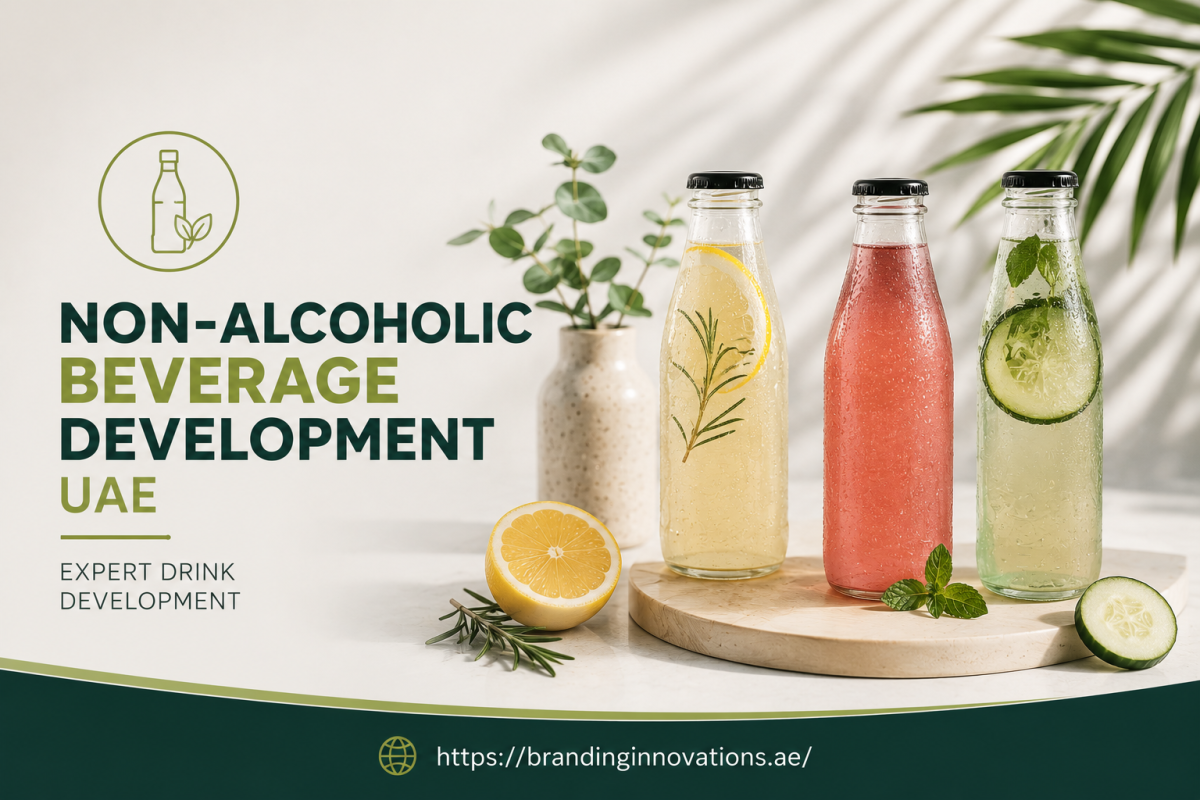
The UAE has become an attractive market for businesses looking to develop innovative food and beverage products. From refreshing soft drinks and sparkling beverages to functional drinks, wellness products, juices, and botanical beverages, there are opportunities across a wide range of non-alcoholic categories.
However, creating a successful beverage requires more than producing a good-tasting drink. A commercially viable product needs a clear concept, carefully developed formulation, appealing flavour, suitable packaging, reliable manufacturing, and a brand identity that connects with its target customers.
This is why non-alcoholic beverage development in the UAE requires a structured approach that combines product development with commercial planning.
Whether you are starting with an original drink idea, an existing recipe, or a specific ingredient concept, professional beverage development can help transform the idea into a refined product ready for commercial production and market launch.
What Is Non-Alcoholic Beverage Development?
Non-alcoholic beverage development is the process of creating and preparing drinks that do not contain alcohol for commercial sale.
The process can include:
- Market research
- Beverage concept development
- Ingredient selection
- Recipe formulation
- Flavour development
- Prototype testing
- Stability assessment
- Packaging development
- Branding
- Manufacturing
- Product launch
Non-alcoholic beverages can include many different categories, such as:
- Soft drinks
- Fruit beverages
- Flavoured water
- Sparkling drinks
- Functional beverages
- Energy drinks
- Sports and hydration drinks
- Wellness beverages
- Botanical drinks
- Ready-to-drink products
Each category has different formulation, sensory, packaging, and commercial requirements.
Why Is Non-Alcoholic Beverage Development Important in the UAE?
The UAE beverage market is highly competitive, with international brands, regional businesses, private-label products, and emerging beverage companies competing for consumer attention.
This makes differentiation important for new products.
A new beverage needs to answer several questions:
- Who is the target consumer?
- What need does the product address?
- What makes it different?
- What flavour experience does it provide?
- What price position will it occupy?
- Where will it be sold?
- Can it be manufactured consistently?
Professional development helps answer these questions before the business commits to large-scale production.
The goal is to create a beverage that is attractive to consumers while also being technically and commercially practical.
Key Stages of Non-Alcoholic Beverage Development UAE
1. Market Research and Consumer Analysis
The first stage is understanding the opportunity.
Research can examine:
- Competitor products
- Consumer preferences
- Beverage trends
- Popular flavours
- Packaging formats
- Price points
- Retail channels
- Emerging categories
Research can also help identify gaps in the market.
For example, there may be opportunities for a low-sugar soft drink, premium sparkling beverage, functional hydration product, botanical drink, or wellness-focused beverage.
The objective is not simply to follow trends. A strong product should have a clear reason for entering the market.
2. Beverage Concept Development
Once the opportunity has been identified, the beverage concept needs to be defined.
A development brief may establish:
- Beverage category
- Target audience
- Product purpose
- Flavour direction
- Functional ingredients
- Sweetness level
- Packaging format
- Price positioning
- Brand personality
For example, a functional hydration beverage for active consumers may require a completely different product concept from a premium sparkling drink designed for hospitality venues.
A clear concept gives the formulation and branding teams a direction to follow.
3. Recipe and Beverage Formulation
The formulation is the foundation of the final product.
Depending on the beverage category, a formula may contain:
- Water
- Fruit ingredients
- Flavouring systems
- Sweeteners
- Acids
- Vitamins
- Minerals
- Electrolytes
- Botanicals
- Functional ingredients
- Colouring ingredients
- Preservative systems where appropriate
The ingredients need to work together to create the intended taste, appearance, mouthfeel, and stability.
For example, a functional ingredient may provide an interesting product proposition but introduce bitterness or an unusual aftertaste. The formulation may then need to be adjusted to achieve a better sensory balance.
Branding Innovations specialises in beverage development and states that its process includes research, recipe creation, refinement, branding, packaging, manufacturing, and launch support.
4. Flavour Development
Taste is one of the most important factors in beverage development.
Consumers may be attracted by a product’s benefits or packaging, but the flavour plays a major role in the overall drinking experience.
Flavour development can involve testing and refining:
- Sweetness
- Acidity
- Aroma
- Flavour intensity
- Mouthfeel
- Aftertaste
Familiar flavours can provide accessibility, while distinctive flavour combinations can help a new product stand out.
The right choice depends on the target consumer and positioning.
For example, a premium botanical beverage may benefit from sophisticated flavour combinations, while a family-oriented fruit drink may require a more familiar and approachable taste.
5. Functional Ingredient Development
Not all non-alcoholic beverages are simply designed for refreshment.
Functional beverages can be developed around specific product propositions such as:
- Hydration
- Energy
- Focus
- Relaxation
- Gut health
- Vitamins and minerals
- Sports performance
- General wellness
Potential functional ingredients can include electrolytes, vitamins, minerals, botanicals, probiotics, prebiotics, adaptogens, amino acids, and other suitable ingredients.
However, ingredients should be selected based on the complete product concept rather than simply because they are popular.
The formulation needs to consider ingredient compatibility, taste, stability, cost, dosage, and applicable requirements.
6. Prototype Development and Testing
The first formulation is rarely the final one.
Prototype development allows different versions of the beverage to be created and evaluated.
Developers may test variations in:
- Ingredient levels
- Sweetener systems
- Flavour combinations
- Acidity
- Functional ingredients
- Carbonation
- Mouthfeel
The formula can then be refined based on the results.
This process helps turn an initial concept into a more consistent and commercially suitable beverage.
Stability and Shelf-Life Considerations
A beverage needs to remain consistent throughout its intended shelf life.
Development should therefore consider potential changes in:
- Flavour
- Colour
- Aroma
- Texture
- Appearance
- Ingredient stability
- Carbonation
Different ingredients can interact during storage, potentially affecting the final product.
Packaging and storage conditions can also influence beverage quality.
For this reason, stability should be considered during development rather than treated as an issue to address only after the recipe has been completed.
Commercial Manufacturing and Scale-Up
Moving from a small development sample to commercial production is an important stage.
A formula that performs well in a laboratory or pilot batch may behave differently when produced at a much larger scale.
Commercial manufacturing introduces differences in:
- Mixing equipment
- Processing conditions
- Production volumes
- Filling systems
- Storage
- Transportation
Scale-up may reveal issues involving ingredient distribution, flavour consistency, carbonation, colour, or stability.
Manufacturing costs also need to be considered.
Ingredient prices, packaging, production volumes, minimum order quantities, filling, and logistics can all affect the final cost of the beverage.
A commercially successful product therefore needs to balance quality, consumer appeal, and production economics.
Packaging and Branding for Non-Alcoholic Beverages
Packaging is one of the first things consumers notice.
A non-alcoholic beverage may compete across supermarkets, convenience stores, restaurants, cafés, hotels, gyms, vending channels, and e-commerce.
Packaging needs to communicate the product clearly while creating a recognisable brand identity.
Packaging development can include:
- Bottle or can selection
- Label design
- Logo
- Typography
- Colour direction
- Product messaging
- Flavour identification
- Required product information
The design should match the target consumer.
A premium wellness beverage may need a sophisticated visual identity, while an energetic functional drink may require a more dynamic design.
Branding should also accurately represent the actual product rather than creating expectations that the beverage cannot deliver.
UAE Regulatory and Tax Considerations
Non-alcoholic does not automatically mean that a beverage is outside UAE food and beverage requirements.
Businesses need to consider areas such as:
- Ingredients
- Food safety
- Labelling
- Product registration
- Nutritional information
- Product claims
- Packaging
- Import requirements
Businesses should obtain appropriate regulatory guidance for their specific beverage and intended market.
Sweetened Beverage Excise Tax
The UAE introduced a new tiered-volumetric model for sweetened beverages from 1 January 2026.
Under the current Federal Tax Authority framework, sweetened drinks containing added sugar or other sweeteners are classified according to their total sugar content per 100 ml. The current categories include low-sugar products below 5 g per 100 ml, medium-sugar products from 5 g to below 8 g, and high-sugar products at 8 g or more per 100 ml.
The current excise rates are AED 0 per litre for products below 5 g per 100 ml, AED 0.97 per litre for products from 5 g to below 8 g, and AED 1.09 per litre for products containing 8 g or more per 100 ml, according to the Federal Tax Authority’s current guidance.
Certain beverages are excluded from the model, including qualifying 100% natural fruit and vegetable juices without added sugar or sweeteners and certain dairy, dietary, and medical beverages.
This makes formulation decisions relevant not only to taste and nutrition but also to the commercial planning of a new beverage.
Why Choose Branding Innovations for Non-Alcoholic Beverage Development?
Choosing an experienced beverage development partner can help businesses manage the journey from an initial concept to a market-ready product.
Branding Innovations specialises in beverage development and branding and states that it has developed and launched more than 200 food and drink brands worldwide.
End-to-End Development
Developing a beverage involves many connected stages.
Branding Innovations provides support across research, recipe development, branding, packaging, manufacturing, product launch, and buyer connections.
This integrated approach allows product and brand decisions to be considered together.
Recipe and Flavour Expertise
The company focuses on beverage recipe development, including ingredient selection, sample creation, and refinement.
This can help businesses develop products that balance functionality, flavour, quality, and commercial requirements.
Branding and Packaging
A strong beverage needs an identity that communicates its proposition quickly.
Branding Innovations combines product development with branding and packaging, helping businesses create a consistent identity around their beverage.
Manufacturing Connections
Once a beverage has been developed, it needs to be produced reliably at commercial scale.
Branding Innovations states that its industry network helps businesses identify co-packers and suppliers and move their products toward manufacturing.
Buyer Connections
Product development should ultimately connect with commercial opportunities.
Branding Innovations states that it has access to more than 6,500 buyers across retailers, wholesalers, and distributors.
This can provide an additional connection between product development and potential market entry.
Common Non-Alcoholic Beverage Development Mistakes
Focusing Only on the Recipe
A good recipe is essential, but branding, packaging, manufacturing, pricing, and distribution also influence success.
Following Trends Without a Clear Concept
A trendy ingredient or flavour does not automatically create a strong product.
Ignoring Taste
Consumers may be interested in a beverage’s benefits, but poor taste can prevent repeat purchases.
Developing Without Commercial Manufacturing in Mind
A formula should be considered for large-scale production from an early stage.
Ignoring Sugar and Sweetener Levels
Sweetener choices can affect taste, formulation, positioning, and UAE excise-tax treatment.
Leaving Branding Until the End
Branding and packaging should support the product proposition from an early stage.
FAQs About Non-Alcoholic Beverage Development in the UAE
What is non-alcoholic beverage development?
It is the process of creating and preparing alcohol-free drinks for commercial production and sale. It can include research, formulation, flavour development, testing, packaging, branding, manufacturing, and launch.
What types of non-alcoholic beverages can be developed?
Development can cover soft drinks, sparkling beverages, flavoured water, juices, functional beverages, energy drinks, sports drinks, wellness beverages, botanical drinks, and other ready-to-drink products.
Can I develop a beverage from my own idea?
Yes. An initial beverage idea can be developed into a structured concept and then taken through formulation, flavour development, testing, branding, packaging, and manufacturing.
Can an existing beverage recipe be improved?
Yes. An existing formula can be reviewed and refined to improve flavour, sweetness, stability, consistency, ingredient balance, or suitability for commercial production.
How long does non-alcoholic beverage development take?
The timeline depends on the beverage category, formulation complexity, number of prototype rounds, testing, packaging, manufacturing, and regulatory requirements.
Are non-alcoholic beverages subject to UAE excise tax?
Some are. The UAE’s current excise framework includes sweetened drinks, while specific categories and exemptions apply. Classification depends on the product’s ingredients and composition.
Can a UAE beverage be expanded into the GCC?
Yes. However, each GCC market may have its own requirements relating to ingredients, labelling, registration, claims, taxation, and import procedures. These requirements should be reviewed before entering each market.
Conclusion
Non-alcoholic beverage development in the UAE involves much more than creating a drink without alcohol. A successful product requires a clear concept, carefully selected ingredients, balanced formulation, appealing flavour, suitable packaging, reliable manufacturing, strong branding, and appropriate commercial planning.
The UAE’s current approach to sweetened beverage excise taxation also makes formulation decisions increasingly important when planning the economics and positioning of a new drink.
By connecting market research, concept development, formulation, flavour refinement, testing, branding, packaging, manufacturing, and launch planning, businesses can create non-alcoholic beverages that are better prepared for the competitive UAE market.
Branding Innovations brings these stages together, helping businesses move from an initial beverage idea toward a refined product, distinctive brand, commercial production, and potential buyer opportunities.
About Richard Horwell
Richard Horwell has been behind more than 200 food and drink brands worldwide during the past 20 years, supporting projects from market research and recipe development through branding and production. His approach is built around innovation rather than imitation and honest guidance about the risks of launching a new brand. Next step: Discuss your beverage idea with the UAE team