
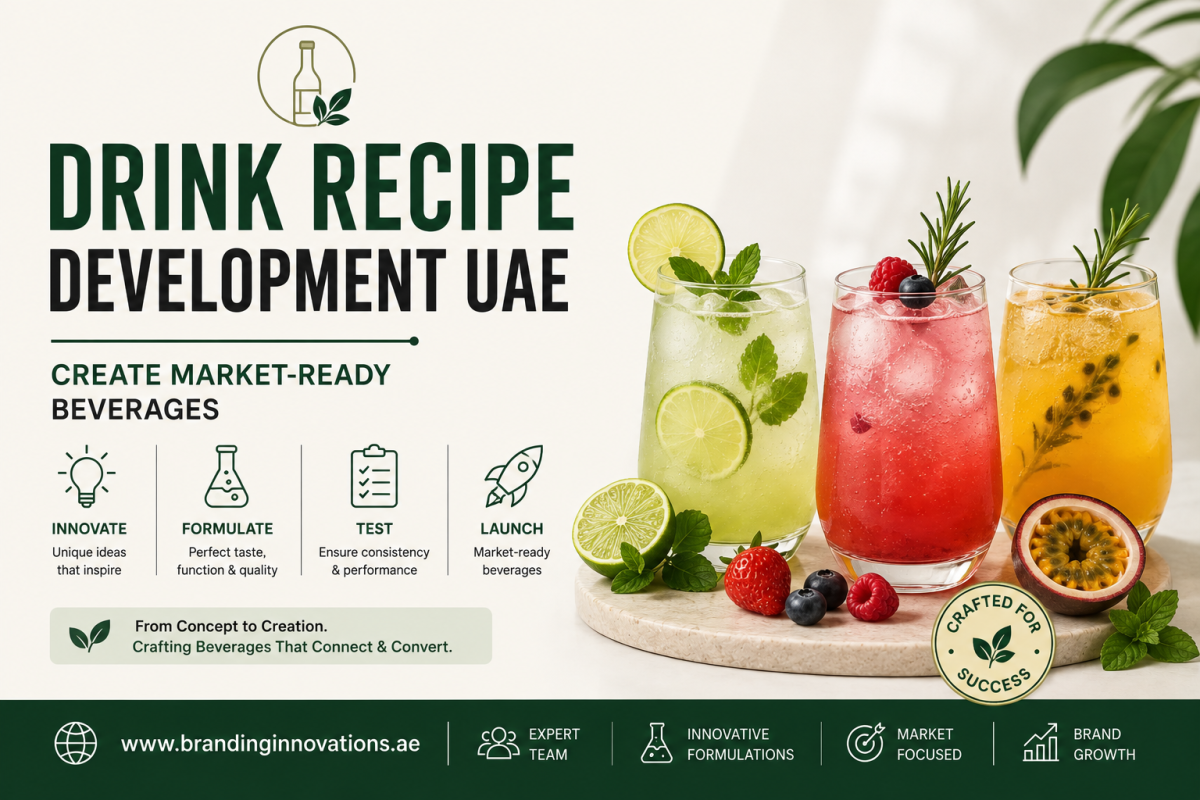
Creating a successful drink starts with an idea, but turning that idea into a commercial product requires much more than mixing ingredients together. A beverage needs to taste appealing, remain consistent, work at commercial scale, meet applicable requirements, and fit the expectations of its target market.
This is where drink recipe development in the UAE becomes essential. Whether you want to create a functional beverage, wellness drink, energy product, flavoured water, juice, sports drink, botanical beverage, or another ready-to-drink concept, professional recipe development can help transform an initial idea into a repeatable commercial formula.
The UAE offers opportunities for beverage entrepreneurs, but the market is also highly competitive. Consumers have access to products from around the world, so a new drink needs a distinctive proposition and a flavour experience that encourages repeat purchases.
What Is Drink Recipe Development?
Drink recipe development is the process of creating, testing, and refining the formula for a beverage.
It involves more than deciding which ingredients should go into a drink. Developers need to understand how those ingredients interact and how they affect the final product.
Recipe development may involve:
- Ingredient selection
- Flavour combinations
- Sweetness and acidity
- Functional ingredients
- Colour and appearance
- Texture and mouthfeel
- Nutritional targets
- Stability
- Shelf-life requirements
- Manufacturing conditions
- Production costs
The purpose is to create a formula that delivers the desired taste and characteristics consistently.
A homemade recipe can be an excellent starting point, but it may require substantial development before it is suitable for commercial production.
Why Is Professional Drink Recipe Development Important in the UAE?
The UAE beverage market includes a wide range of categories, from traditional refreshments to functional, wellness, sports, energy, premium, and natural beverages.
This gives businesses plenty of opportunities to create new products, but it also means consumers have many alternatives.
Professional recipe development can help a brand create a product that is:
- Appealing to its target consumer
- Consistent from batch to batch
- Practical to manufacture
- Suitable for its intended shelf life
- Aligned with its price positioning
- Differentiated from competing products
- Suitable for the intended packaging and format
For example, a functional drink containing vitamins or botanical ingredients may offer an interesting concept, but some ingredients can introduce bitterness, unusual textures, or unwanted aftertastes. Recipe development helps balance these characteristics while preserving the intended product benefits.
The Drink Recipe Development Process
1. Define the Product Brief
Before creating a recipe, the product concept needs to be clearly defined.
The brief may include:
- Target consumer
- Beverage category
- Desired flavour
- Functional purpose
- Nutritional goals
- Packaging format
- Target price
- Sales channels
- Brand positioning
A drink intended for fitness consumers may require a different recipe from a premium beverage designed for cafés, hotels, or supermarkets.
A clear brief helps recipe developers understand what the final product needs to achieve.
2. Select the Ingredients
Ingredient selection is one of the most important stages of recipe development.
Depending on the beverage, developers may work with fruit ingredients, flavours, sweeteners, acids, vitamins, minerals, electrolytes, botanical extracts, stabilisers, preservatives, or other permitted ingredients.
Each ingredient can influence the finished product in different ways.
For example, an ingredient may improve flavour but affect colour or stability. Another may provide a desired functional characteristic but create bitterness. The developer therefore needs to consider the entire formula rather than evaluating ingredients individually.
3. Develop the Flavour
Taste is one of the biggest factors determining whether consumers will return to a beverage.
Recipe development can involve testing different combinations of sweetness, acidity, aroma, flavour intensity, and mouthfeel.
The objective is to create a balanced sensory experience rather than simply making a drink sweeter or stronger.
Flavour innovation can also help differentiate a beverage. Branding Innovations notes that unusual combinations, tropical and citrus profiles, botanical accents, and modern versions of familiar flavours are increasingly being explored in beverage development.
For UAE brands, flavour selection can combine familiar consumer preferences with new or premium flavour concepts to create something distinctive without becoming inaccessible.
4. Create and Test Prototypes
The first recipe is rarely the final one.
Developers create prototypes and evaluate characteristics such as:
- Taste
- Aroma
- Appearance
- Sweetness
- Acidity
- Mouthfeel
- Aftertaste
- Ingredient balance
Based on the results, the formula can be adjusted and tested again.
This process is important because small changes in ingredient levels can significantly affect the final drinking experience.
5. Refine the Recipe
Recipe refinement involves moving from an acceptable prototype toward a commercially stronger formula.
The development team may adjust ingredient quantities, flavour intensity, sweetness, acidity, texture, or other characteristics.
The objective should be to reach a formula that satisfies the product brief while remaining practical from a cost and manufacturing perspective.
Professional recipe development should therefore consider both consumer appeal and commercial practicality.
From Recipe to Commercial Production
One of the biggest challenges in beverage development is moving from a small recipe to large-scale manufacturing.
A formula that works perfectly in a small laboratory or kitchen batch may not behave in exactly the same way during commercial production.
Large-scale manufacturing introduces different:
- Mixing equipment
- Processing conditions
- Temperatures
- Production volumes
- Filling systems
- Storage conditions
Ingredients can behave differently when production quantities increase. Separation, sedimentation, flavour changes, or texture issues may appear during scale-up.
For this reason, commercial recipe development should consider the manufacturing process from an early stage.
Sugar and Sweeteners in UAE Drink Development
Sugar levels are another important consideration for beverage brands developing products for the UAE.
Since 1 January 2026, the UAE has used a tiered volumetric model for excise tax on sweetened beverages. The applicable classification is linked to the amount of sugar and other sweeteners per 100 ml. The Federal Tax Authority states that drinks containing 8 grams or more per 100 ml fall into the high-sugar category, while drinks containing 5 grams or more but less than 8 grams fall into the medium category. Drinks below 5 grams per 100 ml have a zero excise-tax rate under the model.
This means recipe development can have commercial implications beyond taste.
However, reducing sugar is not simply a matter of removing it from the recipe. Sugar contributes to sweetness, body, flavour balance, and mouthfeel. Alternative sweetening approaches may therefore require careful testing to maintain the desired drinking experience.
The FTA also requires producers, importers, and stockpilers of sweetened beverages to obtain an approved conformity certificate for sugar and sweetener content as part of the relevant registration process.
Recipe Development for Functional and Wellness Drinks
Functional beverages require particularly careful recipe development because the product often needs to balance taste with active ingredients.
Vitamins, minerals, electrolytes, botanical ingredients, and other functional components can affect flavour, colour, texture, solubility, and stability.
A good functional beverage should therefore avoid treating the functional ingredient as the only priority.
The final product should also provide an enjoyable drinking experience.
This is particularly important because consumers may purchase a beverage because of its perceived benefits, but taste can determine whether they buy it again.
Why Choose Branding Innovations for Drink Recipe Development in the UAE?
Choosing the right development partner can make the journey from beverage idea to finished product much easier to manage.
Branding Innovations specialises in beverage development and branding, offering an integrated process that covers research, recipe development, branding, packaging, manufacturing, product launch, and buyer connections.
Experienced Recipe Development
Branding Innovations has a dedicated recipe-development process in which ingredients are sourced through specialist suppliers and samples are developed for client feedback and refinement. Its published development presentation describes a focus on creating recipes to a high standard and refining them based on the agreed brief.
End-to-End Beverage Support
Recipe development is only one stage of creating a successful drink brand. Branding Innovations can also support branding, packaging, manufacturing, launch, and buyer connections, allowing businesses to approach the product journey as one connected process.
Commercial Manufacturing Connections
A recipe needs to be suitable for the next stage of development. Through its industry network, Branding Innovations helps brands connect with co-packers and suppliers for commercial production.
Buyer Connections
Getting a beverage into production is not the final goal. Branding Innovations states that its network includes more than 6,500 buyers across retailers, wholesalers, and distributors, helping brands move toward potential commercial opportunities.
Support From Concept to Launch
For businesses entering the beverage industry for the first time, managing every stage independently can be challenging. An integrated development partner can help connect the initial idea, recipe, brand identity, packaging, manufacturing, and launch strategy.
Common Drink Recipe Development Mistakes
Starting Without a Clear Product Brief
Without a defined target consumer and product objective, recipe development can become unfocused and expensive.
Focusing Only on Novel Ingredients
An unusual ingredient does not automatically create a successful beverage. It needs to work within the complete formula.
Ignoring Taste
Functional benefits and nutritional positioning are important, but consumers still expect the beverage to taste good.
Developing Only for Small Batches
A recipe must eventually work at commercial scale. Manufacturing requirements should therefore be considered early.
Leaving Cost Until the End
An expensive formula may be difficult to manufacture profitably. Ingredient selection should consider the intended price and market position.
FAQs About Drink Recipe Development in the UAE
How much does drink recipe development cost in the UAE?
The cost varies depending on the beverage type, ingredient complexity, number of prototypes, testing requirements, and commercial objectives. A simple drink and a complex functional beverage can require very different development processes.
How long does drink recipe development take?
The timeline depends on the complexity of the product and the number of testing and refinement stages required. Functional products, unusual ingredients, and complex stability requirements can increase development time.
Can I use my homemade drink recipe?
Yes. A homemade recipe can provide a useful starting point. However, it may need professional refinement to improve consistency, stability, scalability, taste, and manufacturing compatibility.
Can you develop a low-sugar drink recipe?
Yes, low-sugar beverage development is possible, although reducing sugar may require careful adjustment of sweetness, acidity, flavour, and mouthfeel. UAE excise-tax considerations can also make sugar levels commercially relevant.
Can a drink recipe be developed for GCC markets?
Yes. If the beverage is intended for GCC expansion, it is useful to consider the requirements of target markets during development, including ingredients, labelling, packaging, registration, and applicable claims.
What types of drinks can be developed?
Professional recipe development can cover many categories, including functional beverages, wellness drinks, juices, flavoured water, sports drinks, energy beverages, botanical drinks, and other ready-to-drink products.
Conclusion
Drink recipe development in the UAE is about much more than combining ingredients. It is a structured process of defining a product concept, selecting ingredients, creating flavours, testing prototypes, refining the formula, and preparing the beverage for commercial production.
A successful drink needs to balance taste, functionality, stability, cost, scalability, and market expectations. It should also be developed with the intended UAE market and applicable requirements in mind.
For businesses with a beverage idea, working with an experienced development partner can help turn an initial recipe or concept into a professionally developed product. With support extending from recipe development through branding, packaging, manufacturing, launch, and buyer connections, the journey from drink idea to market-ready beverage becomes more structured and commercially focused.
About Richard Horwell
Richard Horwell has been behind more than 200 food and drink brands worldwide during the past 20 years, supporting projects from market research and recipe development through branding and production. His approach is built around innovation rather than imitation and honest guidance about the risks of launching a new brand. Next step: Discuss your beverage idea with the UAE team